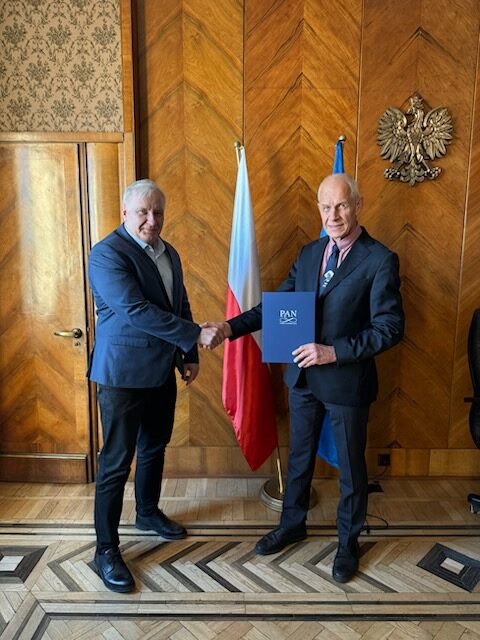
Marek Konarzewski, President of the PAS (left) and Prof. Leszek Roszkowski, Director of Astrocent (right) Credits: Astrocent
Good news for particle astrophysics from Poland: a new institute devoted to the field, the International Institute for Particle Astrophysics, Polish Academy of Sciences (in short Astrocent Institute) has just been created. It began its operations on 1 March 2026, with Prof. Leszek Roszkowski as its Director. This marks an exciting milestone for our community and the beginning of a new chapter for Astrocent as a fully established international institute. It is an inspiring start to a new journey – one that will strengthen Astrocent’s scientific mission, expand technological impact, and open new opportunities for collaboration and discovery.
The Astrocent project started in 2018 within the Nicolaus Copernicus Astronomical Center of the Polish Academy of Sciences as a completely new autonomous centre of excellence with the funding of nearly 38 million PLN from the Foundation for Polish Science’s International Research Agendas Programme (IRAP). Its current growth and transformation to a new institute is based on three main pillars: the Horizon Europe Teaming for Excellence project Astrocent Plus (since January 2025), which initiated the transformation, augmented by the complementary funding from the IRAP grant (since January 2026) and support from the Ministry of Science and Higher Education. Together, these streams amount to €30 million over six years and provide a stable base to expand our human and research infrastructure capacity, partnerships, and training – aiming at making the invisible side of the Universe to become visible, and turning discovery into a value for society. Astrocent is a new institute dedicated to studying the Universe through its most elusive messengers, like neutrinos, dark matter, and gravitational waves – in other words, the invisible Universe.
Supported by: IRAP AstroCeNT (MAB/2018/7) funded by FNP from ERDF; Astrocent (FENG.02.01-IP.05-A015/25) co-financed by the European Union under FENG 2021–2027; Teaming for Excellence grant Astrocent Plus (101137080) funded by the European Union with complementary national funding from the MNiSW (MNiSW/2025/DIR/811).
From the smallest particles to the largest structures in the universe, from the quantum world to new materials and biological systems: Science in the German Helmholtz Association’s Matter research field takes us to extraordinary places — into highly complex experiments, international collaborations, and data spaces where new knowledge emerges from observations.
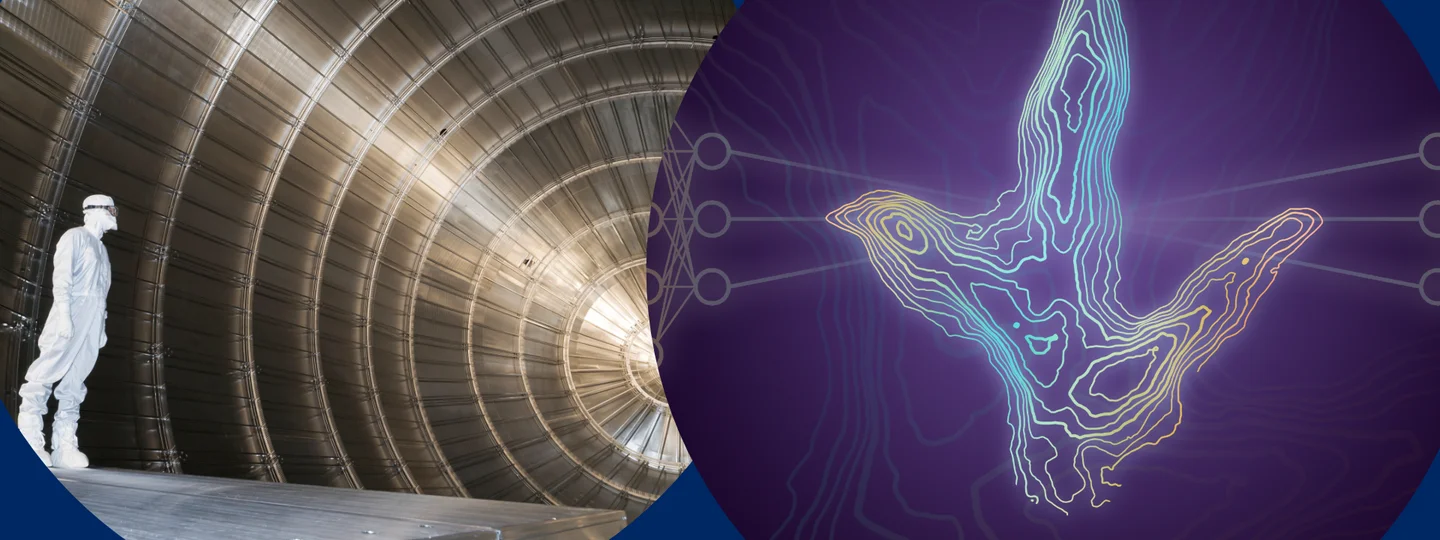
If you want to learn about the most recent limit on the neutrino mass from KATRIN or if want to explore dinosaur footprints with a new App then check out the first two Helmholtz Matter News Sheets: https://matter.helmholtz.de/en/news-sheets/
You find more insights to the research being done at Helmholtz Matter and the participating Helmholtz centres here: https://matter.helmholtz.de/en/
We are pleased to announce that, for the first time, the KM3NeT and Pierre Auger Collaborations are opening a call to access KM3NeT and Pierre Auger Observatory data, respectively. This new opportunity has been enabled in the framework of the ACME project. You can find the details of the calls in the corresponding webpages:
The deadline for submission is on May 22nd, 2026, 12:00 UTC. Following proposal submission, a Program Committee will evaluate proposals, with this cycle’s review conducted by a joint KM3NeT+Pierre Auger committee.
If you have any inquiries before submission, you can contact the respective collaborations using the contact emails provided in the description of the calls.
ACME brings together the Astroparticle and Astronomy communities in a joint effort to create new opportunities for research communities through access to world‑class facilities to accelerate the advancement of frontier knowledge in the multimessenger and transient astrophysics fields.
The ACME project has received funding from the European Union’s Horizon Europe Research and innovation programme under Grant Agreement No 101131928.
The International School on Astroparticle Physics (ISAPP) has been advancing early-stage training for PhD students and young researchers since 2002. With a network of 44 leading institutions, ISAPP fosters collaboration, innovation, and knowledge exchange in astroparticle physics.
In 2025, ISAPP organized two successful summer schools in Lecce and Vienna, focusing on high-energy cosmic rays and gravitational waves. These events combined expert lectures, hands-on sessions, and vibrant student interactions.
Looking ahead to 2026, ISAPP will host two new summer schools. In June, Paris-Saclay University will explore “High-Energy Astrophysics: Sources and Detection”; while Munich will focus on “The Low Energy Frontier: Dark Matter and Neutrinos” in July.
Don’t miss the chance to engage with experts and shape the future of astroparticle physics.
The third TNA call of the ACME project for the Centres of Expertise (funded by the European Union’s Horizon Europe research and innovation programme under grant agreement No 101131928) is open.
The call aims to support research visits to European institutes that provide direct training and expert guidance in multi-messenger astronomy. The program covers a wide range of domains, including gravitational waves, neutrinos, cosmic rays, and photons across the entire electromagnetic spectrum, from very-high-energy gamma rays to X-rays, UV, optical, near-infrared, and radio bands. The goal is to enhance and expand expertise in the observational, data analysis, and theoretical aspects across the various ACME messengers and multi-wavelength domains.
Eligible candidates are scientists (PhD students, post-doc fellows, staff) from research institutes and universities in both EU and non-EU countries. The applicant can apply for access (visit) to an institution located in a country other than the country of their home institution.
The call opens on 2 March 2026, with a submission deadline of 2 April 2026 at 17:00 CET. Research visits are expected to take place before the end of November 2026.
All the details of the call and the application form can be found here.
The ACME project has received funding from the European Union’s Horizon Europe Research and innovation programme under Grant Agreement No 101131928.
The AstroParticle Physics European Consortium is pleased to invite you to participate in the Town Meeting dedicated to the preparation of the European Astroparticle Physics Strategy 2027–2036:
The meeting will take place in person in Geneva, Switzerland, on 2–3 September 2026.
As part of the roadmap development process, a community-wide survey was conducted in 2024 within the astroparticle physics community, followed more recently by a second survey across European astroparticle physics collaborations. Drawing on these valuable inputs, the APPEC Scientific Advisory Committee is preparing a draft Roadmap addressing all strategic themes identified in the surveys, with a preliminary version expected in summer 2026.
This Town Meeting will provide an opportunity to examine each scientific topic in depth, considering both the European and the broader international context. We will discuss recent advances in astroparticle physics and neighbouring disciplines, as well as developments in the research infrastructures landscape — all of which will contribute to shaping the strategic recommendations for the coming decade.
Over the course of two days, the programme will combine plenary presentations with focused round-table discussions. This format is designed to foster broad community engagement and to ensure that participants play a central role in defining the future strategic directions of astroparticle physics in Europe.
The discussions and conclusions from this Town Meeting will serve as the community input to the European Astroparticle Physics Strategy 2027–2036.
The APPEC Consortium convened its General Assembly for two in-person meetings in 2025: on the 4th and 5th of June in Prague, hosted by the Institute of Experimental and Applied Physics IEAP-CTU and on the 8th and 9th of December in Stockholm hosted by the Swedish Research Council.
These meetings provided an opportunity to review ongoing APPEC activities and collaborations in the European context and the adjacent scientific fields, and discuss the preparation of the upcoming strategic roadmap for astroparticle physics. Four General Assembly meetings have been scheduled for 2026. These sessions will provide important opportunities to review progress, discuss upcoming initiatives, and make collective decisions for the year ahead.
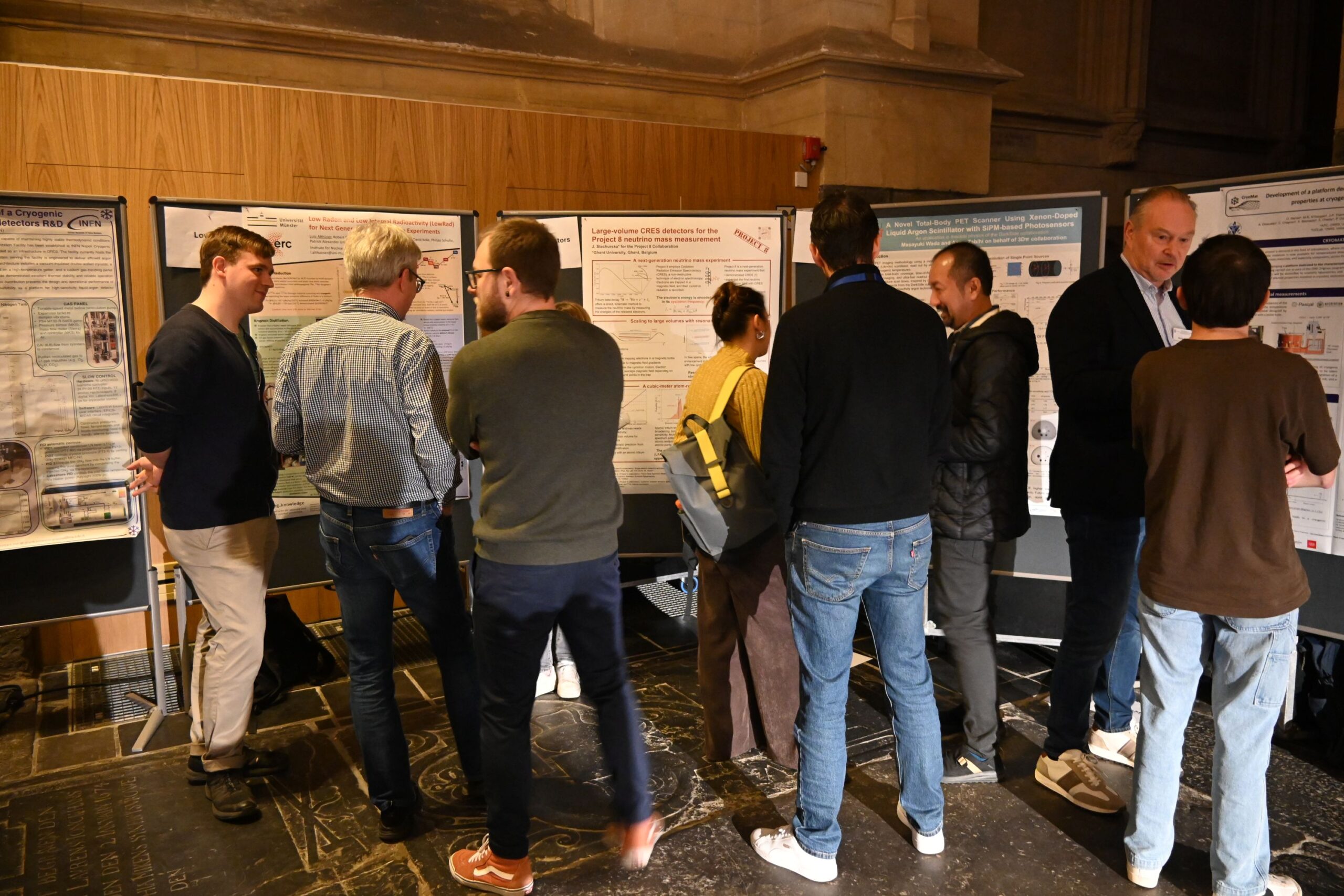
Discussions during the Potser Session at the APPEC Tech Forum 2025.
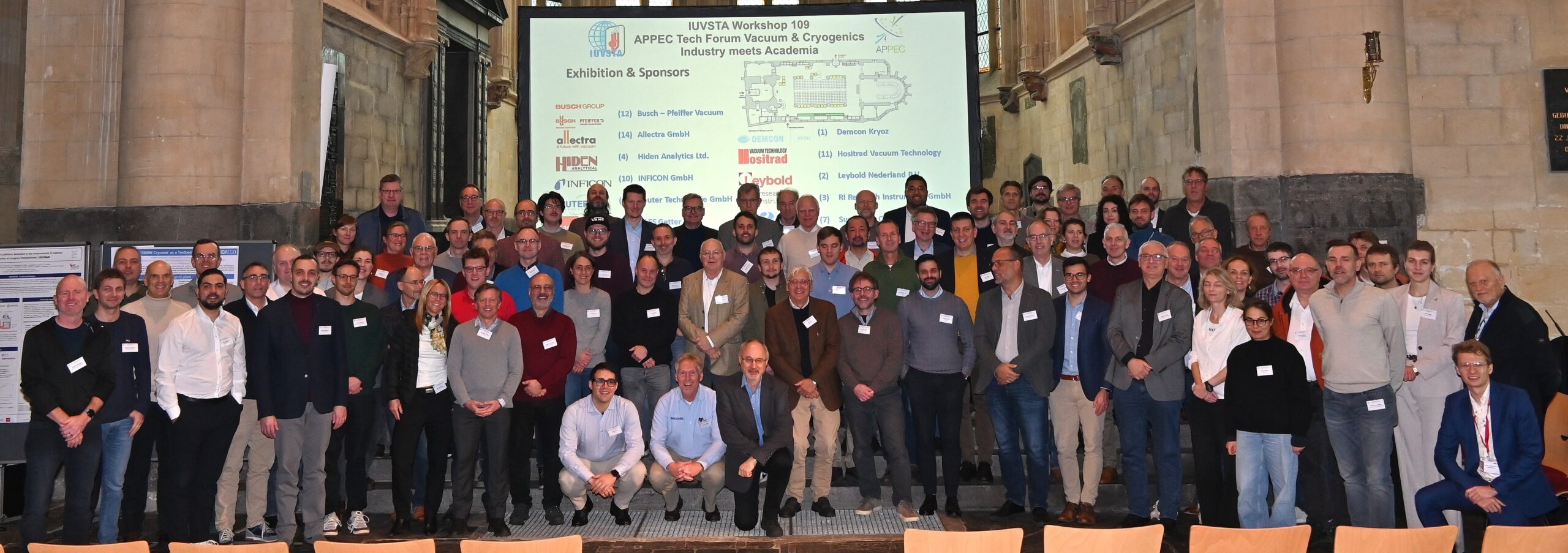
The IUVSTA Workshop 109 APPEC Tech Forum on Vacuum & Cryogenics took place in November in Maastricht, bringing together 103 participants from 11 countries. The program featured 17 academic presentations and 12 industry capability pitches, complemented by two panel discussions on cryogenics and vacuum technology. These sessions emphasized the importance of improving communication between scientists and industry engineers, particularly when involving industry in planning large-scale experiments.
The workshop concluded with a visit to the ET Pathfinder experiment at the University of Maastricht, a facility developing and testing technologies for the Einstein Telescope’s cryogenic interferometers.
The KATRIN experiment has searched with unprecedented precision for signs of a fourth type of neutrino, that could reveal new physics beyond the Standard Model. No signal was found, tightening the constraints on one of the most debated puzzles in neutrino research.
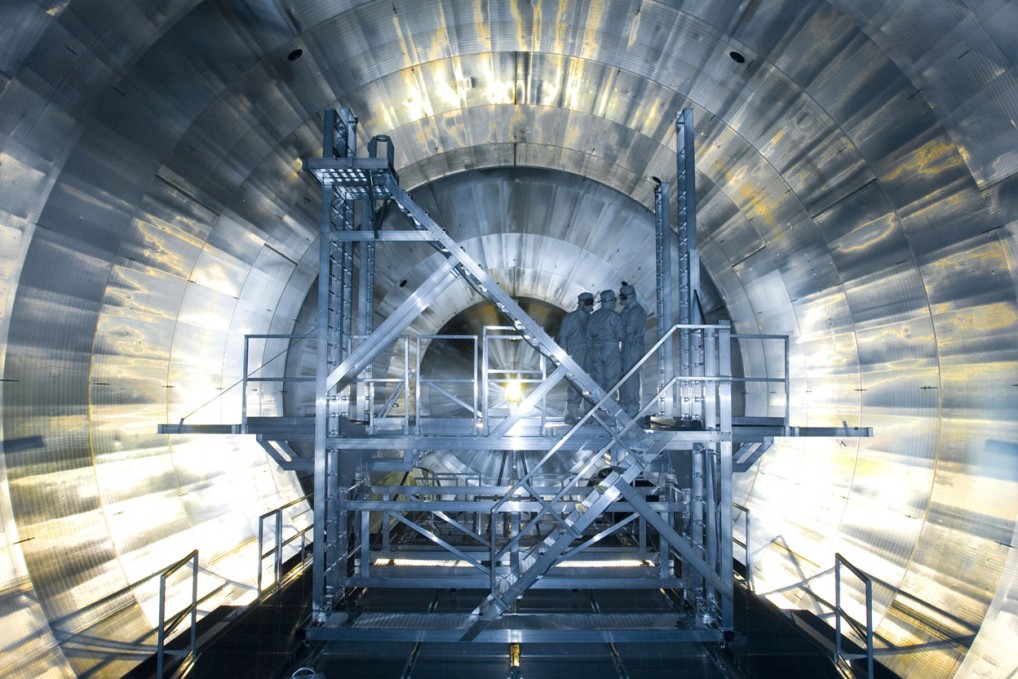
Inside the large electrostatic spectrometer, the heart of the Karlsruhe Tritium Neutrino Experiment KATRIN. Credits: Michael Zacher
Neutrinos, though nearly invisible, are among the most numerous matter particles in the Universe. The Standard Model recognizes three types, but the discovery of neutrino oscillations revealed they have mass and can change identity while propagating. For decades, puzzling experimental anomalies have suggested the presence of a fourth, sterile neutrino, one that interacts even more weakly. Finding it would transform our understanding of particle physics.
In a new study, published in Nature, the KATRIN collaboration presents the most precise direct search for sterile neutrinos through measurements of tritium β-decay.
The KATRIN (Karlsruhe Tritium Neutrino) experiment, built to determine the neutrino mass, measures the energy spectrum of electrons emitted in the β-decay of tritium. In this process, the energy carried away by the neutrino subtly shapes the detected electron spectrum. If an additional sterile neutrino existed, it would occasionally be emitted in the decay, producing a distinct distortion, or “kink”, in the electron energy spectrum. KATRIN, located at the Karlsruhe Institute of Technology in Germany, is a large experiment extending over 70 meters. It comprises three main components: a high-luminosity windowless gaseous tritium source that emits electrons, a high-resolution spectrometer system that measures their energy, and a detector that counts them. Since 2019, KATRIN has measured the tritium β-decay spectrum with unmatched precision, looking for small deviations, especially the characteristic kink expected
from a sterile neutrino.
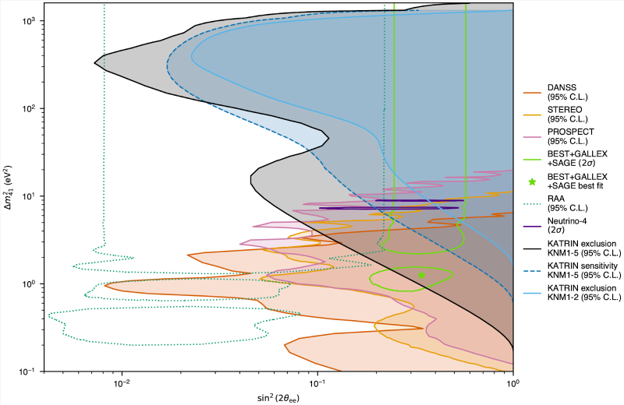
The new Nature publication presents the most sensitive search to date for sterile neutrinos using the β-decay of tritium. KATRIN collected 36 million electrons over 259 days from 2019 to 2021 and compared them to a β-decay model, reaching sub-percent measurement accuracy. No sign of a sterile neutrino was found. The result excludes a large region of parameter space suggested by earlier anomalies: small but significant deficits observed in reactor-neutrino and gallium-source experiments that had hinted at a fourth neutrino state. It also fully rules out the Neutrino-4 experiment claim, which had reported evidence for such a signal. With an excellent signal-to-background ratio ensuring that almost all detected electrons come from tritium β-decay, KATRIN achieves a remarkably clean measurement of the spectral shape. In contrast to oscillation experiments, which study how neutrinos change flavor after traveling some distance, KATRIN probes the energy distribution at the point of creation. Relying on distinct detection methods, the two approaches complement each other and jointly deliver a powerful test that disfavors the sterile-neutrino hypothesis.
KATRIN’s new data (black) largely rule out the sterile-neutrino hints suggested by earlier reactor and gallium anomalies.
From DOI: 10.1038/s41586-025-09739-9
“Our new result is fully complementary to reactor experiments such as STEREO,” explains Thierry Lasserre (Max-Planck-Institut für Kernphysik) in Heidelberg, who led the analysis. “While reactor experiments are most sensitive to sterile–active mass splittings below a few eV², KATRIN explores the range from a few to several hundred eV². Together, the two approaches now consistently rule out light sterile neutrinos that would noticeably mix with the known neutrino types.”
With data collection continuing through 2025, KATRIN’s sensitivity will further increase, enabling even more stringent searches for light sterile neutrinos. “By the completion of data taking in 2025, KATRIN will have recorded more than 220 million electrons in the region of interest, increasing the statistics by over a factor of six,” says KATRIN co-spokesperson Kathrin Valerius (KIT). “This will allow us to push the boundaries of precision and probe mixing angles below the present limits.” In 2026, the KATRIN experiment will be upgraded with the TRISTAN detector, capable of recording the full tritium β-decay spectrum with unprecedented statistics. By bypassing the main spectrometer and measuring electron energies directly, TRISTAN will be able to explore much higher sterile-neutrino masses. “This next-generation setup will open a new window into the keV-mass range, where sterile neutrinos might even form the Universe’s dark matter,” says co-spokesperson Susanne Mertens (Max-Planck-Institut für Kernphysik).
The KATRIN Collaboration
Scientists from over 20 institutions across 7 countries are working on the KATRIN project.
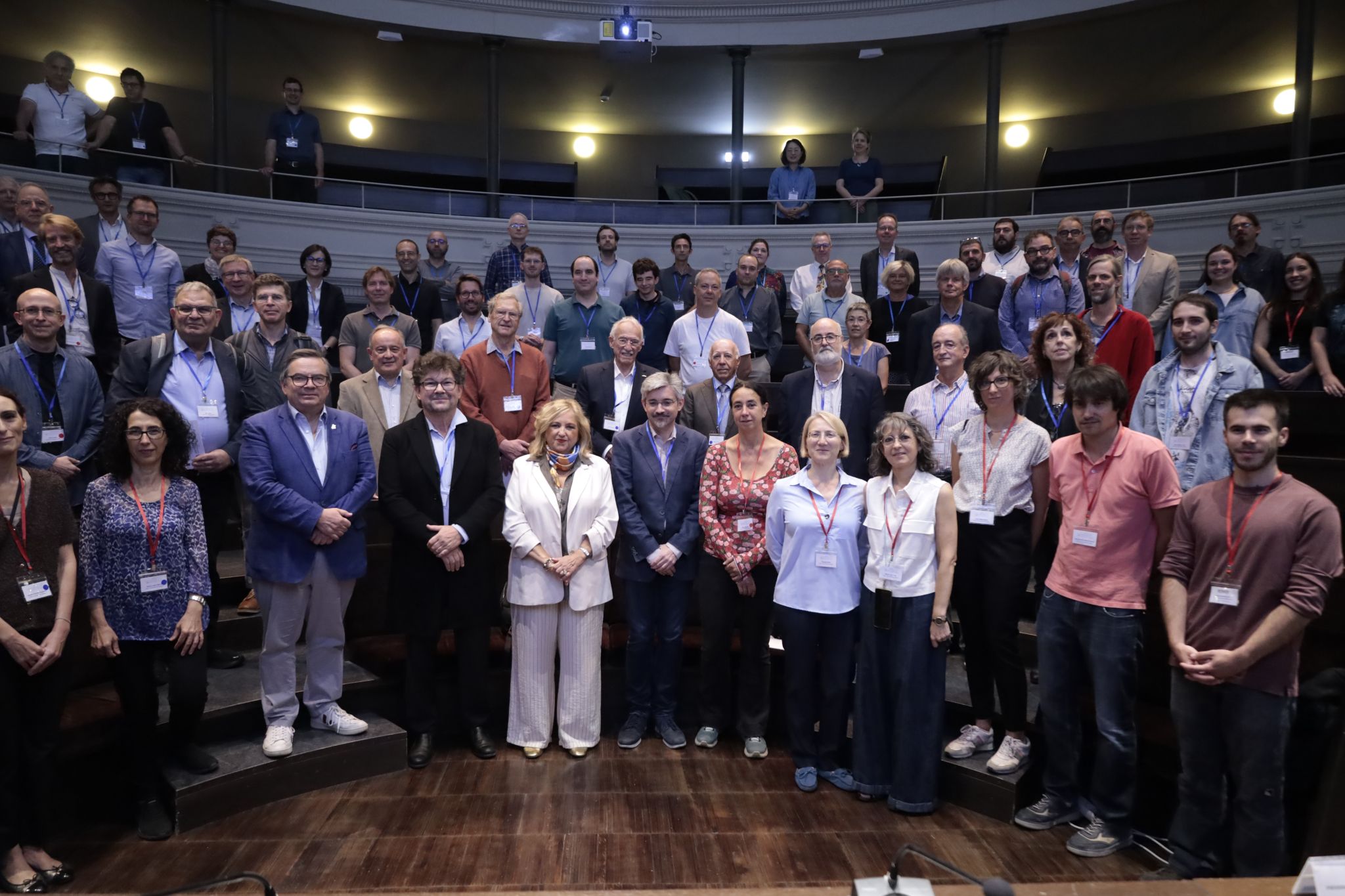
On the 23rd and 24th of September, more than 100 researchers met in Zaragoza to discuss the new developments in Astroparticle Physics and in the neighboring fields that will shape the strategic recommendations of the next strategic roadmap.
The round table sessions at the APPEC Town Meeting provided additional input from the community. Currently an updated document is under preparation by the APPEC Scientific Advisory Committee.