An international team of scientists has found the first evidence of a source of high-energy cosmic neutrinos, ghostly subatomic particles that can travel unhindered for billions of light years from the most extreme environments in the universe to Earth.
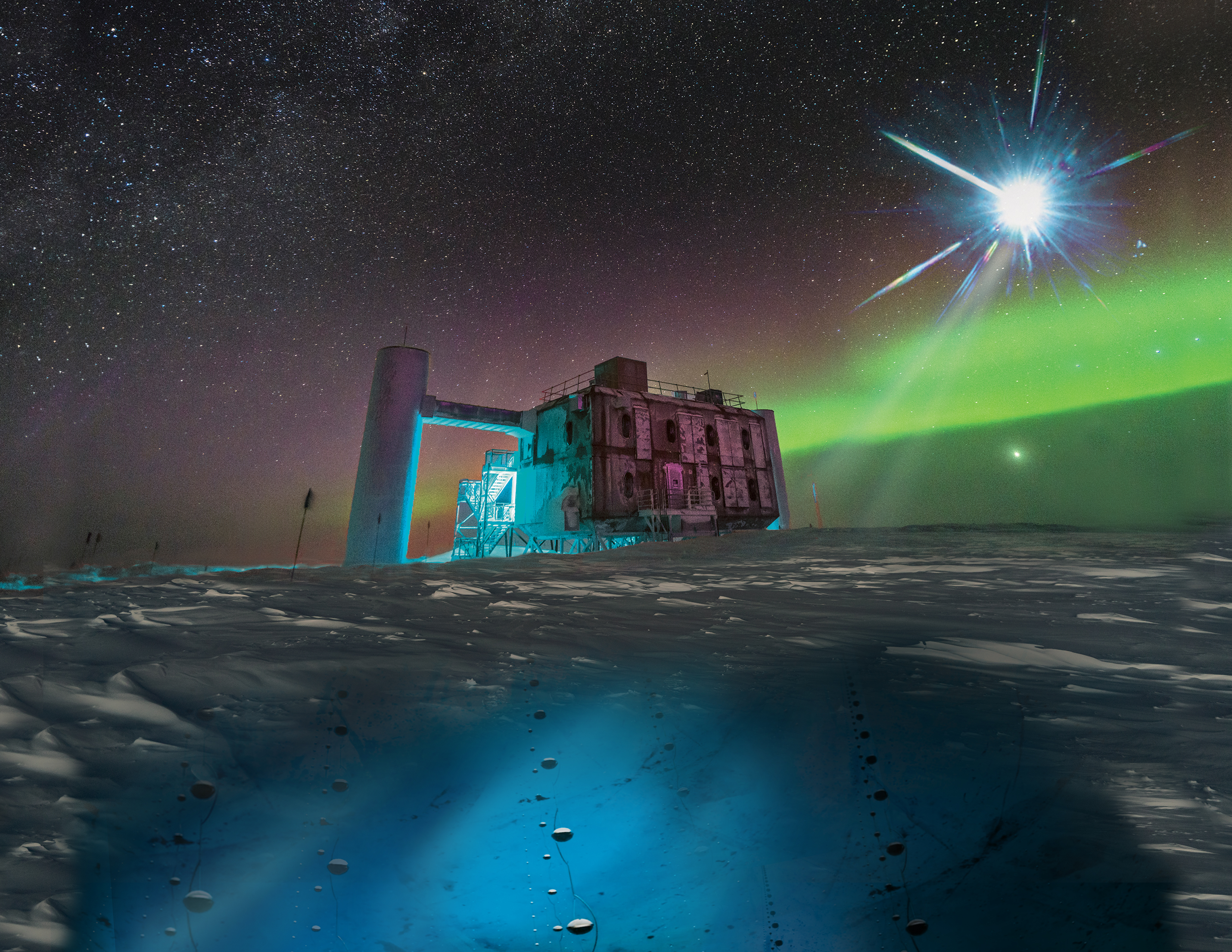
The IceCube Lab at the South Pole with aurora
Credit: Icecube/NSF
The observations, made by the IceCube Neutrino Observatory at the Amundsen–Scott South Pole Station and confirmed by telescopes around the globe and in Earth’s orbit, help resolve a more than a century-old riddle about what sends subatomic particles such as neutrinos and cosmic rays speeding through the universe.
APPEC’s General Assembly Chair, Antonio Masiero commented, “This year APPEC launched its new roadmap for the European astroparticle physics strategy over the next decade. A central pillar in the construction of this roadmap is represented by the multi-messenger approach to explore the most energetic events occurring in the Universe.
“The first success was seen last year with the simultaneous observations of the gravitational waves and the photons emitted in the merger of two neutron stars. Today the IceCube Neutrino Observatory marks a major milestone on our path to establish the validity and feasibility of this new way of the observing the Universe with the announcement of the second observation of a multi-messenger event, this time related to neutrinos and photons emitted in the accretion phase of a far black hole.
“Multi-messenger astronomy allows an unprecedented level of investigation of the structure and dynamics of celestial bodies and all the high-energy events of the Universe. APPEC plays a crucial role in favouring the synergy of the relevant European assets in astroparticle physics in general and the multi-messenger field in particular. This is a research field where Europe has all the potential to play a world-leading role in the coming years“
The research has been published in the journal Science.
Laura Baudis, Professor of Physics at the University of Zurich has been appointed by the APPEC General Assembly as the new Chair of the APPEC Scientific Advisory Committee (SAC) commencing in June 2018.
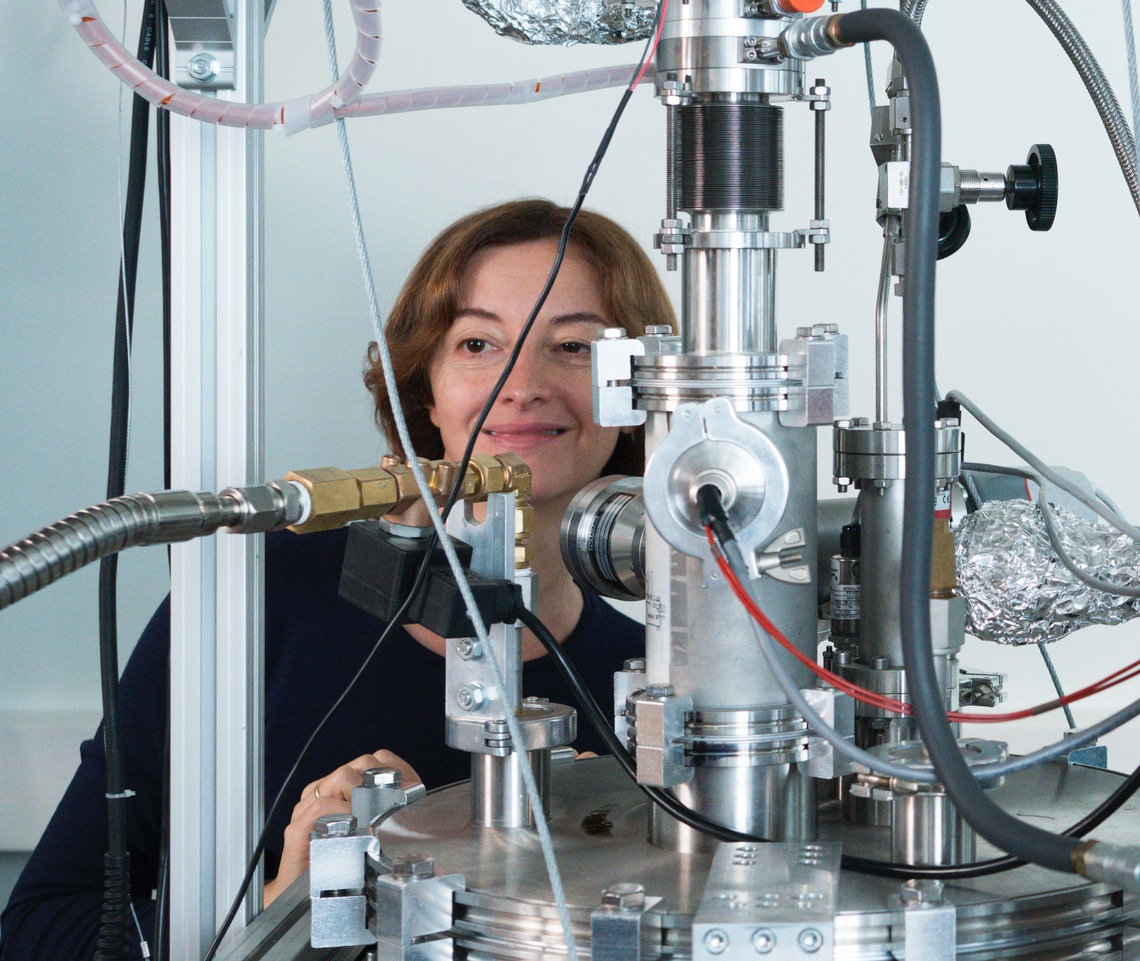
Laura Baudis (University of Zurich)
Professor Baudis was elected Chair of the SAC by representatives of the member countries of the group which coordinates research in Astroparticle Physics in Europe.
At the same General Assembly Jocelyn Monroe, from Royal Holloway University London, was elected Deputy Chair.
Speaking of her appointment Professor Baudis said “Thank you for your trust; I am of course very honoured by the GA decision to appoint me as chair of SAC for two years.
“I look forward to working together with all of you, as well as with Jocelyn and the renewed SAC towards the challenging task of implementing the APPEC roadmap recommendations.”
APPEC Chair and former SAC chair Professor Antonio Masiero welcomed the appointments and said “We are really happy that Laura and Jocelyn have kindly accepted to act as chairwoman and vice chairwoman, respectively, of our renewed SAC.
“The SAC is going to play a crucial role in the major challenge we’re tackling in this period of APPEC activities, namely the implementation of the roadmap
Jocelyn Monroe (RHUL)
recommendations.”
As part of International Women’s day 2018, Corinne Mosese spoke to Laura about what inspired her to go into physics and her advice for young girls considering their career choices. Find out more here: http://www.appec.org/news/profile-professor-laura-baudis
Biographies
Laura Baudis joined the Physics Department at the University of Zurich in August 2007 as a full professor in experimental physics. She received her PhD from the University of Heidelberg in 1999 and went on to become a postdoctoral fellow at Stanford University, where she worked on the Cryogenic Dark Matter Search experiment. In 2004, she moved to the University of Florida, Gainesville, as an assistant professor, where she started to work on detectors using liquefied xenon (the first stage in the XENON programme, XENON10). In 2006, she was awarded the Lichtenberg Professorship for Astroparticle Physics at the RWTH, Aachen University. She is a Fellow of the American Physical Society (APS), a member of the CERN Science Policy Committee and an Editor-in-chief of the European Physical Journal C. In 2017, she was awarded an ERC Advanced Grant for the Xenoscope project.
Jocelyn Monroe joined the RHUL Physics Department in 2011, founding the Dark Matter & Neutrino research group within the Centre for Particle Physics. From 2009 she was an Assistant Professor in the MIT Physics Department. From 2006-09 she was a Pappalardo Fellow in MIT’s Laboratory for Nuclear Science, working on the SNO solar neutrino oscillation experiment and as a founding member of the DMTPC project. Monroe earned her Ph.D. from Columbia University in 2006, where her dissertation research was on the MiniBooNE accelerator neutrino oscillation experiment. From 1999-2000, she was an Engineering Physicist at the Fermi National Accelerator Laboratory, where her research was on the physics of muon beam cooling. Monroe earned her B.A. in Astrophysics from Columbia University in 1999.
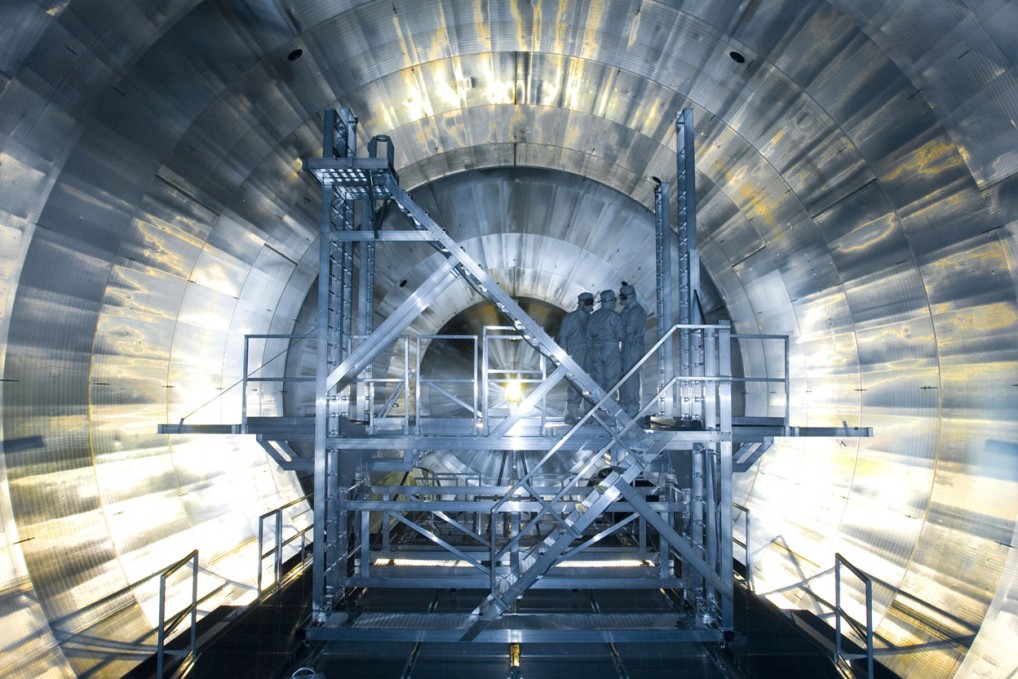
What is the mass of neutrinos? To answer one of the most fundamental and important open questions in modern particle physics and cosmology, the KATRIN experiment was designed and built by an international collaboration at Karlsruhe Institute of Technology (KIT) in southwest Germany. A special Inauguration Colloquium on June 11 marked the start of its long-term data taking phase.
KATRIN is a massive detector that has been designed to measure a neutrino’s mass with far greater precision than existing experiments. At the centre of KATRIN is a 200-tonne spectrometer, and scientists hope that with this new experiment they can start to collect data that in the next few years will give them a better idea of just how massive neutrinos can be.
Germany’s Federal Minister of Research Anja Karliczek said ”KATRIN is an experiment of superlatives and will complement the knowledge about our universe by a decisive piece of the puzzle.”
APPEC strongly supports the present range of direct neutrino-mass measurements and searches for neutrino-less double-beta decay. Guided by the results of experiments currently in operation and in consultation with its global partners, APPEC intends to converge on a roadmap for the next generation of experiments into neutrino mass and nature by 2020.
Results from XENON1T, the world’s largest and most sensitive detector dedicated to a direct search for Dark Matter in the form of Weakly Interacting Massive Particles (WIMPs), were reported on Monday, 28th May by the spokesperson, Prof. Elena Aprile of Columbia University, in a seminar at the hosting laboratory, the INFN Laboratori Nazionali del Gran Sasso (LNGS), in Italy.
The international collaboration of more than 165 researchers from 27 institutions, has successfully operated XENON1T, collecting an unprecedentedly large exposure of about 1 tonne x year with a 3D imaging liquid xenon time projection chamber. The data are consistent with the expectation from background, and place the most stringent limit on spin-independent interactions of WIMPs with ordinary matter for a WIMP mass higher than 6 GeV/c². The sensitivity achieved with XENON1T is almost four orders of magnitude better than that of XENON10, the first detector of the XENON Dark Matter project, which has been hosted at LNGS since 2005. Steadily increasing the fiducial target mass from the initial 5 kg to the current 1300 kg, while simultaneously decreasing the background rate by a factor 5000, the XENON collaboration has continued to be at the forefront of Dark Matter direct detection, probing deeper into the WIMP parameter space.
XENON1T installation in the underground hall of Laboratori Nazionali del Gran Sasso. The three story building houses various auxiliary systems. The cryostat containing the LXeTPC is located inside the large water tank next to the building. Credit: Roberto Corrieri and Patrick De Perio
The OPERA experiment, located at the Gran Sasso Laboratory of the Italian
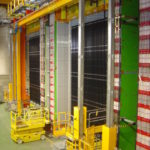
View of the OPERA detector (on the CNGS facility) with its two identical Super Modules, each one containing one target section and one spectrometer (Credit: CERN)
National Institute for Nuclear Physics (INFN), was designed to conclusively prove that muon-neutrinos can convert to tau-neutrinos, through a process called neutrino oscillation, whose discovery was awarded the 2015 Nobel Physics Prize. In a paper published today in the journal Physical Review Letters, the OPERA collaboration reports the observation of a total of 10 candidate events for a muon to tau-neutrino conversion, in what are the very final results of the experiment. This demonstrates unambiguously that muon neutrinos oscillate into tau neutrinos on their way from CERN, where muon neutrinos were produced, to the Gran Sasso Laboratory 730km away, where OPERA detected the ten tau neutrino candidates.
Today the OPERA collaboration has also made their data public through the CERN Open Data Portal. By releasing the data into the public domain, researchers outside the OPERA Collaboration have the opportunity to conduct novel research with them. The datasets provided come with rich context information to help interpret the data, also for educational use. A visualizer enables users to see the different events and download them. This is the first non-LHC data release through the CERN Open Data portal, a service launched in 2014.
“We have analysed everything with a completely new strategy, taking into account the peculiar features of the events,” said Giovanni De Lellis Spokesperson for the OPERA collaboration. “We also report the first direct observation of the tau neutrino lepton number, the parameter that discriminates neutrinos from their antimatter counterpart, antineutrinos. It is extremely gratifying to see today that our legacy results largely exceed the level of confidence we had envisaged in the experiment proposal.”
APPEC is pleased to announce that at the latest General Assembly meeting held on May 17 2018 Hungary formally joined APPEC.
The Hungarian Academy of Sciences (MTA) supports multi-messenger astrophysics focusing on gravitational wave research, exploring the characteristics of the high-energy Universe, as well as cosmology and the study of the properties of dark matter and dark energy. Furthermore, MTA will contribute in APPEC to R&D activities on Common Projects (e.g. Einstein Telescope) and to the development of theoretical bases, computing and application of deep-underground laboratories, as well as to support education, outreach and industrial connections.
MTA is a public body functioning as a self-regulatory legal entity which carries out a national civic duty by practicing, supporting, overseeing and representing Hungarian science and can operate as consultant of the government
Welcome Hungary!
APPEC’s General Secretary Job de Kleuver welcomes Peter Forgacs, the representative of Hungary in the APPEC General Assembly meeting
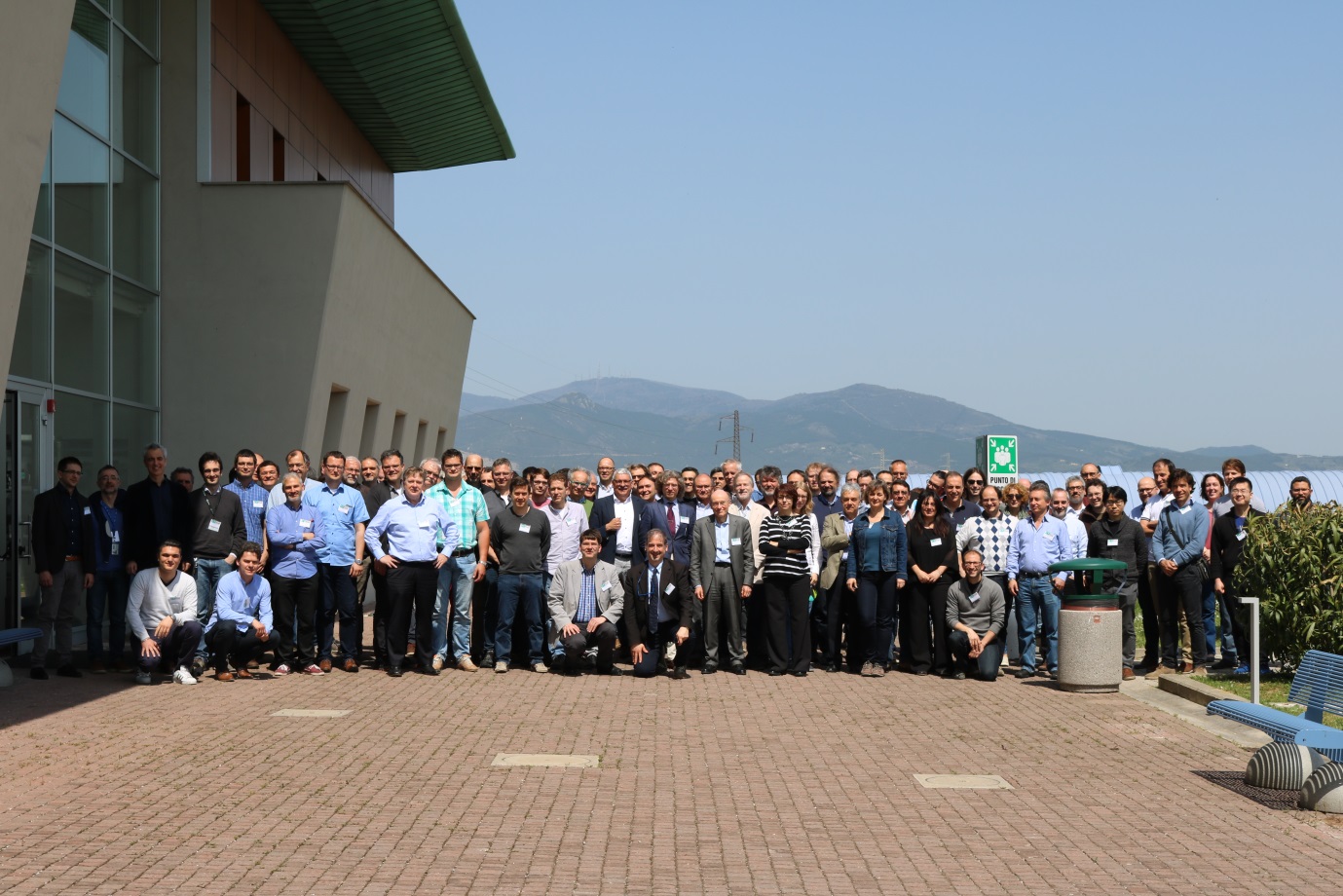
The 9th Einstein Telescope (ET) Symposium took place on 19-20th April, 2018 at the European Gravitational Observatory (EGO) in Cascina, Italy. Key members of APPEC were among the more than 100 participants that attended.
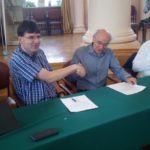
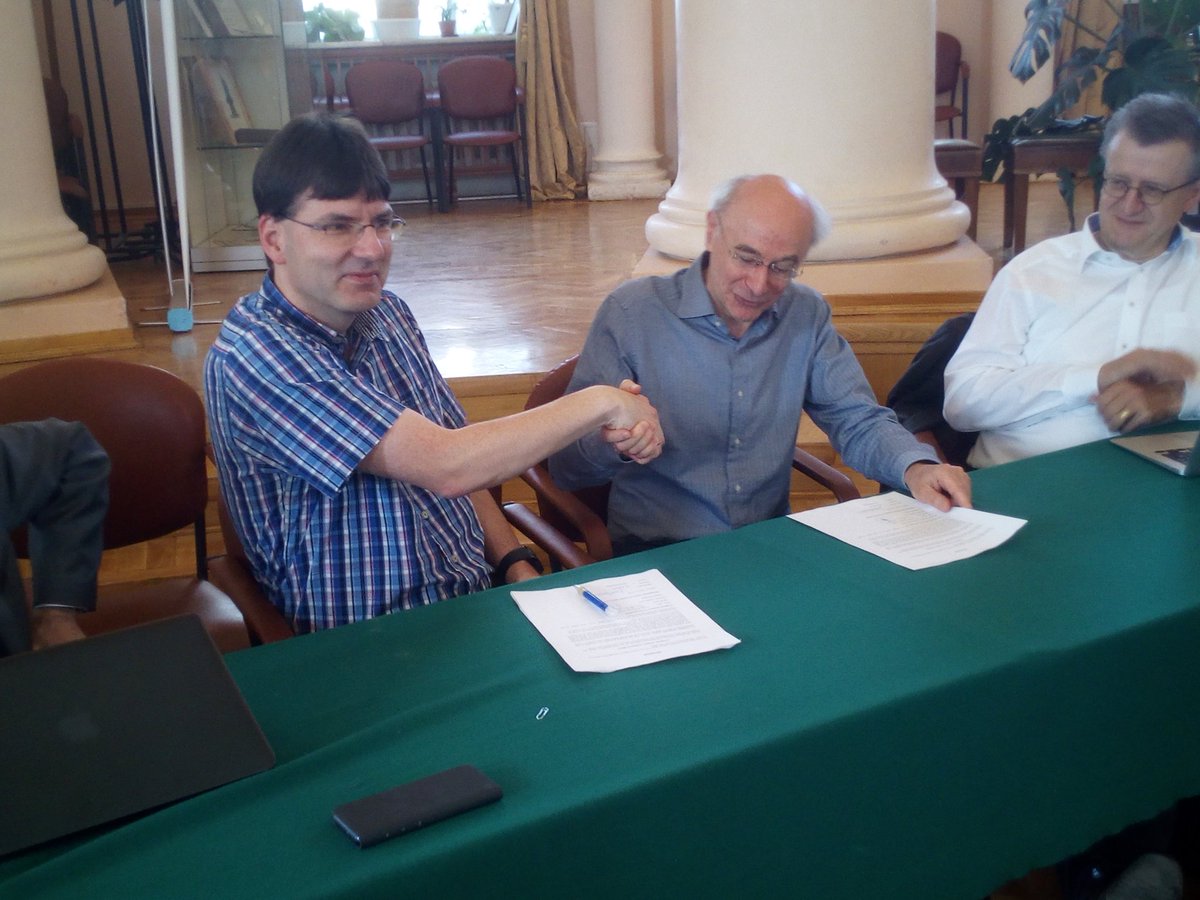
During the meeting, a Letter of Intent declaring the foundation of the Einstein Telescope Collaboration was signed, declaring support for the establishment of ET and its scientific goals, and officially marking the formation of the collaboration.
Birth of the ET-collaboration in Cascina
APPEC’s General Secretary, Job de Kleuver, said after the event, “Today at EGO-VIRGO we celebrate the birth of the Einstein Telescope collaboration. Exciting prospects for third generation gravitational wave detection and multi-messenger astronomy – two of the big priorities identified in the latest European astroparticle physics strategy.”
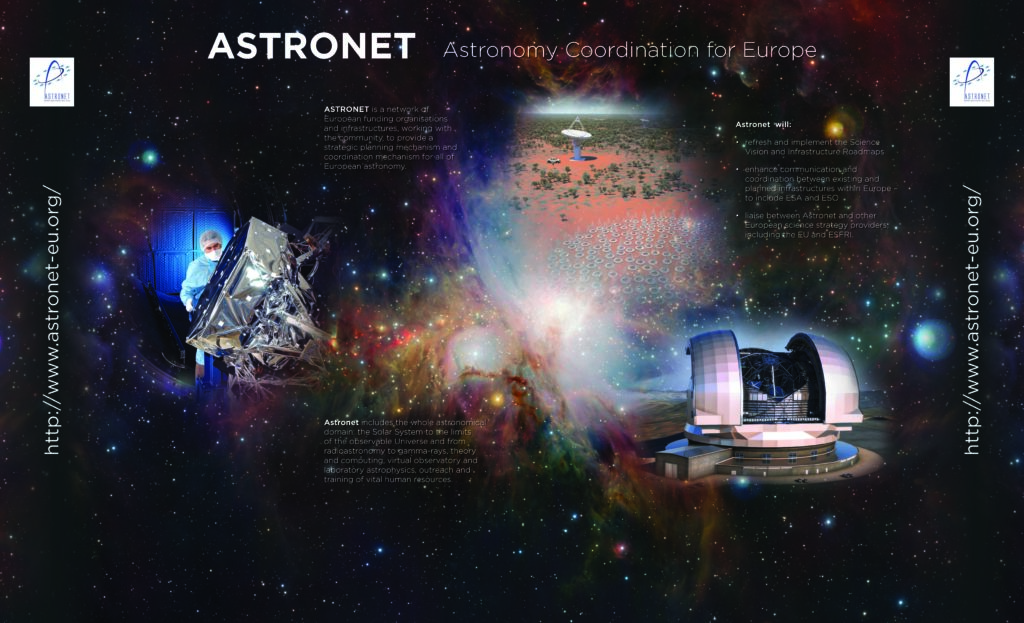
The European network for Astronomy and space science has recently been re-launched, funded by a variety of agencies. Astronet aims to act as a forum for strategic issues relating to the European astronomy programme and to foster the implementation of the recommendations arising from the previous EU-funded network.
As well as national agencies, or their delegated representatives, Astronet includes strong links to ESO, ESA and the European Astronomical Society. Work is underway to encourage wider membership so that Astronet truly represents all European interests. It expects to also establish stronger links with APPEC and the various continuing EU programmes – such as Opticon, Radionet, Europlanet etc. Part of its role will be to help feed into the astronomy priorities for future EU programmes, and ESFRI.
Astronet published updates of its original Science Vision and Infrastructure Roadmaps in 2014 and 2015 but is just establishing the mechanism to undertake the next full revisions of these planning tools, with a view to publication in 2020. This is a major exercise which we expect to involve an opportunity for the whole community to provide input.
They have also re-launched the Astronet web site. If members of the APPEC community have news or items that would be relevant for the wider community please contact: Colin Vincent
APPEC spin-off project SENSE (a Horizon 2020 Coordination and Support Action aiming to coordinate research and development efforts in academia and industry on low light-level sensors – www.sense-pro.org) is glad to announce that the first version of the SENSE Roadmap is ready for download (https://www.sense-pro.org/documents/roadmap). This Roadmap aims to define the R&D activities that SENSE would like to follow for the development of the ultimate low light-level sensor(s), mainly for future astroparticle physics projects, but also for other applications, e.g. in medical diagnostics, biology, automotive industry, safety.
For more developments and news on SENSE you are invited to subscribe for the SENSE newsletter (https://www.sense-pro.org/newsletter-subscription). It reports discussions which take place in the SENSE consortium and upcoming SENSE events or meetings. It also provides information on interesting developments regarding LLL sensors and portraits of test facilities available to the community working on photosensors, of companies (and in the next future evaluation cards for some of their products) and of experiments dealing with photosensors.
You are also welcome to register to the SENSE forum and use it to discuss with the experts and the SENSE team your ideas and questions around the future developments on LLL sensoring.
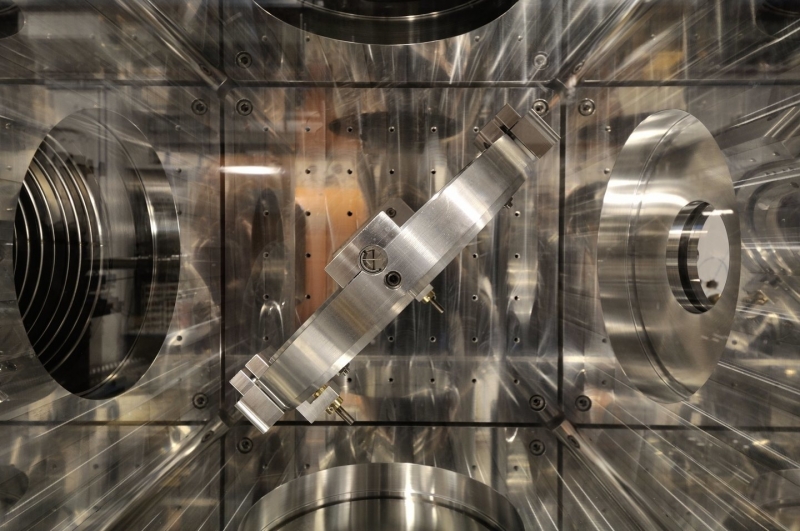
Major science laboratories from around the world today announced a Global Physics Photowalk competition, open to amateur and professional photographers.
Photographer: Pietromassimo Pasqui. Laboratory: INFN National Laboratory of Frascati, Italy
Physics facilities in Asia, Australia, Europe and North America will open their doors for a rare opportunity to see behind the scenes of some of the world’s most exciting and ground-breaking science.
The photowalk will involve local and national competitions, with the winning national photos submitted to a global judging panel. Organised by the Interactions Collaboration, and supported by the Royal Photographic Society (RPS), the global shortlist will be announced in August, followed by a public vote.
Confirmed locations include CERN – the home of the Large Hadron Collider – as well as underground laboratories in the US, Australia and the UK; and labs and facilities in Italy, the UK, the US, Canada, and – for the first time – China.
Mark Richardson, Chair of the RPS Science Committee, said:
“This is a fantastic celebration of the stunning beauty of science on an international scale. The world’s best scientific research is based on international collaboration, a worldwide melting pot of expertise and technologies, each working for the benefit of our global society and economy. The photowalk is a rare opportunity to capture work behind the scenes at the world’s best international laboratories and capture it, frame by frame.”
International competition participating laboratories:
The Interactions Collaboration:
The Interactions Collaboration (Interactions.org) seeks to support the international science of particle physics and to set visible footprints for peaceful collaboration across all borders. Members of the Interactions collaboration represent the world’s particle physics laboratories and institutions in Europe, North America, Asia and Australia, with funding provided by science funding agencies from many nations. The collaboration also developed and maintains the www.darkmatterday.com website.
The Royal Photographic Society:
The Royal Photographic Society is a registered charity, supported by its 11,600 members. Founded in 1853, to promote the art and science of photography, its objectives today are to educate members of the public, promote the highest standards, and to encourage the public appreciation of photography. It does this through public events and activities, exhibitions, and its educational activities. See: www.rps.org