

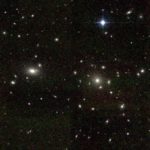
Bullet-proof Test for Dark Matter & Helical Waves in Plasmas
24 June 2015

24 June 2015
24 June 2015
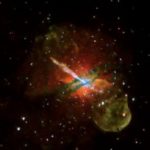
Using ever more energetic lasers, Lawrence Livermore researchers have produced a record high number of electron-positron pairs, opening exciting opportunities to study extreme astrophysical processes, such as black holes and gamma-ray bursts.
24 June 2015
Chandra Press Release, 28 May 2015
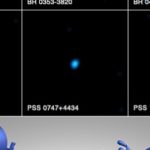
A team of scientists has used X-ray and gamma-ray observations of some of the most distant objects in the Universe to better understand the nature of space and time. Their results set limits on the quantum nature, or “foaminess” of space-time at extremely tiny scales.
24 June 2015

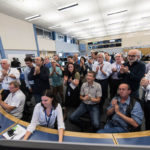
CERN control room
CERN Press Release, 3 June 2015
Today, CERN’s Large Hadron Collider (LHC) started delivering physics data for the first time in 27 months. After an almost two year shutdown and several months re-commissioning, the LHC is now providing collisions to all of its experiments at the unprecedented energy of 13 TeV, almost double the collision energy of its first run. This marks the start of season 2 at the LHC, opening the way to new discoveries. The LHC will now run round the clock for the next three years.
Location: Madrid, Spain
Date: 22/06/2015 – 26/06/2015, all day
The Invisibles15 Workshop follows Invisibles15 School, and it will be organized in collaboration with the Thyssen-Bornemisza Museum (Madrid) with scheduled meetings at both the IFT (Universidad Autónoma de Madrid campus, 2 full days) and the museum itself (3 full days).
The focus of the workshop will be on the interfaces between the physics of the visible and the invisible (neutrinos, dark matter and Beyond the Standard Model Physics) sectors:
Location: La Laguna, Tenerife – Canary Islands, Spain
Date: 22/06/2015 – 26/06/2015, all day
The European Week of Astronomy and Space Science (EWASS, formerly JENAM) is the annual meeting of the European Astronomical Society (EAS). With more than 20 years of tradition, it has imposed itself as the largest conference for European astronomy. In addition to plenary sessions and the award of prestigious prizes, the conference hosts many symposia held in parallel, as well as special sessions and meetings.
The EAS together with one of its affiliated societies, organises the annual EWASS conference to enhance its links with national communities, to broaden connections between individual members and to promote European networks.
Location: Rhodes island, Greece
Date: 19/06/2015 – 25/06/2015, all day
The focus of this workshop will be on different aspects of modern theoretical cosmology, the challenge to be consistent with experimental data and the necessary connection of cosmological theories with the quantum nature of the vacuum.
Topics include:
Cosmological models: modified gravities, f(R) theories and the like, non-local models
Possibility of Observing Modified Gravity in an Astrophysical Level (Neutron Stars)
Quantum Gravity
Quantum Cosmology and Loop Quantum Cosmology
Quantum vacuum and the Casimir Effect
The cosmological constant problem
Mathematical physics techniques for quantum vacuum studies
Location: ESO, Garching (near Munich), Germany
Date: 18/06/2015 – 19/06/2015, all day
The aim of the workshop is to bring together representatives of funding agencies (European and national) with facility and project managers to discuss what should be expected from scientific dissemination activities. Furthermore it should be a forum for PR and information officers to share experience of their work and gain insights into the expectations of funding bodies as well as from the general public.
Location: La Cristalera, Madrid, Spain
Date: 15/06/2015 – 21/06/2015, all day
The Invisibles15 School precedes Invisibles15 Workshop. In this edition the focus of the school will be collider physics, flavour and BSM phenomenology.
Lecture topics include:
Effective Field Theory – David B. Kaplan
Physics Beyond the Standard Model – Hitoshi Murayama
LHC Phenomenology – Gilad Perez
LHC Tools – Fabio Maltoni
LHC Experimental Aspects – Lydia Fayard
Flavour Physics – Yossi Nir
Tutorial sessions every day – Mattias Blennow, Concha Gonzalez-Garcia, Silvia Pascoli and Steve Parke.
Two special 1-hour lectures – Alvaro de Rújula, Concha Gonzalez-García.
Location: Paris, France
Date: 15/06/2015 – 25/06/2015, all day
Time is ripe for an in-depth look at the field in light of the new results from the Planck satellite mission and the beginning of an era of large surveys dedicated to dark energy research. No prior experience in cosmology is required as introductory courses will present the standard cosmological model and observational techniques. Topics to be covered include the cosmic microwave background, the early universe, large-scale structure, dark energy observations and theory, modified gravity, instrumental techniques. It will finish with a look to future prospects in major research areas. The present school is open to PhD students and post-docs working in the fields of cosmology, high energy astrophysics and particle physics.