Twitter bird

  • APPEC Roadmap Advert

Newly elected APPEC Chair and General Secretary

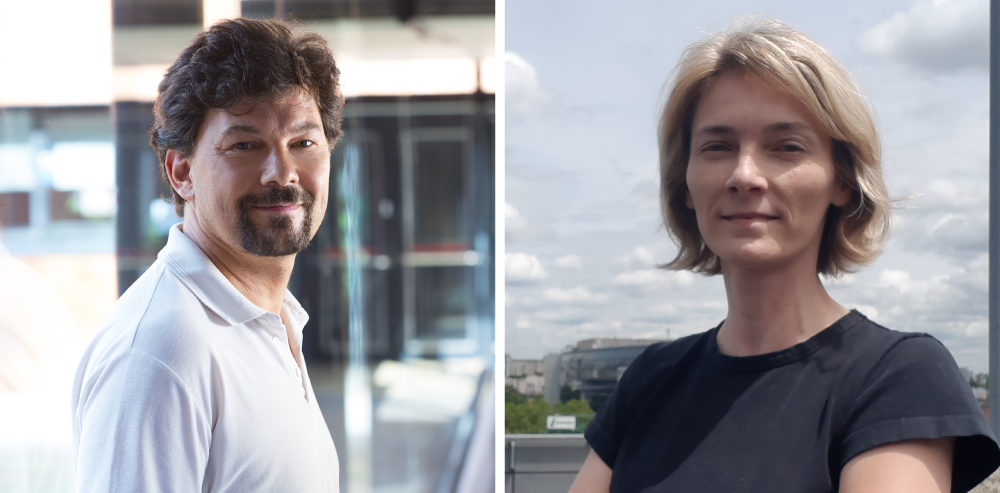
We are happy to announce Carlos Peña Garay as the newly elected Chair of the APPEC General Assembly, who will start his term from December 2024, and Julie Epas as the new General Secretary of APPEC.

Carlos Peña Garay (left) and Julie Epas (right), the newsle elected APPEC GA Chairperson and General Secretary.

Carlos Peña Garay, current director of the Laboratorio Subterráneo de Canfranc (LSC) in Spain, has accepted to become the new Chairperson of APPEC, following his election at the APPEC General Assembly held on June 5th 2024 in Amsterdam.
Carlos made major contributions to the Astroparticle Physics domain. Between 1998 and 2003, he contributed to the solution of the Solar Neutrino Problem, which proved that neutrinos have a finite mass. He also significantly contributed to other various areas of research, including high-energy neutrinos, low-energy positrons, neutrino-less double beta decay, and dark matter searches. Carlos’ leadership at LSC involves developing sensitive radiopure detectors and hosting experiments in underground labs to reduce cosmic ray background.
Carlos’ vision for APPEC over the next two years is to represent the Astroparticle Physics community views at their best in Europe’s decision-making process, for the long-term future of the field, and to be influential in strengthening the support and resources to execute them. A major responsibility will be to lead the preparation of the European Astroparticle Physics Strategy 2027-2036 by coordinating the community views and supporting all actions required by the APPEC Scientific Advisory Board to prepare the report. 
To ensure a smooth transition, the Chairperson of APPEC will change in December 2024. Until the end of the year, newly elected Carlos Peña Garay will shadow the current Chair Andreas Haungs (Karlsruhe Institute of Technology) to support him in coordinating APPEC activities.

During the same APPEC General Assembly, a new General Secretary was appointed. Julie Epas (APC Laboratory IN2P3/CNRS) replaces Katharina Henjes-Kunst (DESY). Julie Epas is a very experienced project manager in science and technology projects. Julie has been the project manager for the functional center of APPEC in Paris since 2021.

We would especially like to thank former Secretary General Katharina Henjes-Kunst for her intensive work and all her valuable contributions to the astroparticle community over the past years.

The Future of Astroparticle Physics in Europe: Presentation of the Mid-Term Update of the European Astroparticle Physics Strategy

The European Astroparticle Physics Consortium (APPEC) announces that the Mid-Term Update of the European Astroparticle Physics Strategy 2017-2026 has been successfully finalised and approved by its General Assembly. The updated roadmap was developed in collaboration with the APPEC Scientific Advisory Committee and the wider community and neighbouring disciplines. The presentation of this important update took place during an event entitled “The Future of Astroparticle Physics in Europe” where also the community presented the plans and ideas of current and future research facilities and experiments in a very lively poster session. The connections between experiment and theory as well as the synergy potential and complementarity with the astrophysics and astronomy domain were discussed at this event.

The mid-term update shows that the APPEC European Strategy for Astroparticle Physics 2017-2026 is well on track to be realised. Most of the strategic goals are on schedule and are expected to be achieved. However, it has become clear that some goals are no longer achievable, leading to adjustments in the strategic goals. At the same time, new strategic goals are emerging in other areas. Projects such as a new European gravitational wave detector (Einstein Telescope) are in an advanced stage of development. This has prompted the APPEC community to make some medium-term course adaptations in the strategic goals of various scientific astroparticle physics topics.

Andreas Haungs, APPEC GA chair, during the presentation, ©Katharina Henjes-Kunst

“Astroparticle physics uses large-scale research facilities to detect the sources and properties of messengers from the universe, which are often set up in remote locations such as on the South Pole, deep in the Mediterranean Sea, on high mountains, in the Argentinian pampas or in large underground laboratories. This implies a high need for coordination, especially in the area of data processing, as the data from these observatories must be brought together, preferably in real-time, to be of optimal use,” says Dr Andreas Haungs from KIT (Karlsruhe Institute of Technology), Chair of the APPEC General Assembly. “These large infrastructures, especially underground laboratories, are crucial to maintain and develop. An initiative for much closer co-operation between European underground laboratories is welcomed by APPEC. The resources available for the operation of existing large infrastructures, as well as for investment in those currently under construction or planned for the future, will be reviewed globally. The idea is that, despite the constant struggle for more resources, the field’s basic budget offers it a promising future.”

Poster Session during the event, ©Katharina Henjes-Kunst

“Progress in astroparticle physics goes hand in hand with profound changes in the social and societal environment of science in general and thus also of astroparticle physics. Attracting and retaining talent is increasingly becoming a challenge. Social safety in all aspects is increasingly emphasised and open science is rapidly becoming the norm. Consideration of societal impact in the widest sense is now a must. Therefore, the strategic goals for how we want to operate as scientists in astroparticle physics have become more important and clearer.” emphasised Prof. Sijbrand de Jong (Radboud University Nijmegen), who, as head of the APPEC Scientific Advisory Board, presented the roadmap update to the interested audience.


Press release:


In memory of Berrie Giebels

Dear Berrie,

It is with great sadness that we have received the news that you have left us far too soon. With your calm and empathetic manner and your broad expertise in the entire field of research, you made an important contribution to APPEC. In particular, as CNRS representative in APPEC, you were co-responsible for the elaboration and creation of the “European Strategy for Astroparticle Physics 2017-2026” for several years. Until recently, you were also APPEC’s contact person for the US Snowmass and P5 strategy process. Only recently we contacted you to give an update on this process at our meeting, and only a few days later we received the news of your death, which filled us with great sadness.

APPEC and the astroparticle physics community owe you a lot and we always felt very comfortable in your presence. We will miss you.

Andreas Haungs and Katharina Henjes-Kunst for APPEC

The Euclid Mission: unravelling the mysteries of the dark Universe

An artist impression of ESA’s Euclid mission in space.
Credits: ESA. Acknowledgement: Work performed by ATG under contract for ESA., CC BY-SA 3.0 IGO

The Euclid satellite was sent into orbit on July 1, 2023. Over a period of six years, the European Space Agency’s (ESA) Euclid mission and its space telescope will construct an extensive cosmic map, spanning both space and time, to investigate the nature and the development of the dark Universe. Euclid represents the outcome of a global partnership, engaging researchers from CNRS-INSU and CNRS-IN2P3. The Euclid Consortium, comprising over 1,500 scientists hailing from 300 diverse research facilities and institutions in 17 distinct nations, was responsible for supplying the scientific tools and will actively engage in generating and examining the scientific data.


For more information about the Euclid mission see: https://www.esa.int/Science_Exploration/Space_Science/Euclid

Search for a diffuse neutrino emission from the Milky-Way with the ANTARES experiment

The twelve detector lines have subsequently been recovered during two campaigns in May and June 2022. First the anchor of a line is hissed onboard the Castor 02 vessel (left) leaving the other line elements floating on the sea surface (right).
Credits: ANTARES

ANTARES took its last data on February 2022 and since then it has been completely dismantled, but the research, publications, and data releases are still ongoing.
Recently, the latest ANTARES data samples from the track-like and shower-like events induced by different neutrino interactions were used to test several models that predict the neutrino flux produced from the interaction of cosmic rays with atomic and molecular gas in the Milky-Way.
The results of the search for a diffuse neutrino emission from the Galaxy with a likelihood method using the latest ANTARES data available were presented at the ICRC 2023 conference and the paper can be found in the Proceedings of Science https://pos.sissa.it/444/1084/pdf, with the final conclusion that a combination of the ANTARES data with data from other experiments like
KM3NeT and IceCube would strengthen even more the evidence for the existence of neutrino flux coming from the Galactic Plane.


You can also find more information about ANTARES telescope on its brand new website https://antares.in2p3.fr/


Open PhD positions at the International Helmholtz-Weizmann Research School on Multimessenger Astronomy (MM School)

The next application round will begin on SEPTEMBER 25, 2023 and close on NOVEMBER 5, 2023.

ABOUT THE REASEARCH SCHOOL: The school aims at bringing highly qualified and motivated graduate students to the forefront of the field of multimessenger astronomy through a world-class international training environment. PhD students will work with leading scientists in the field and benefit from their complementary expertise in theory and experiments involving the various messengers. Collaboration between students and researchers at the partner institutions is facilitated through a lively exchange program. The professional training of students includes data science as a supporting component of the school. Furthermore, the school offers a number of individual measures to promote career development.
Depending on the primary location (Germany or Israel), the PhD will be earned either at the Humboldt-University Berlin, the University of Potsdam, the Friedrich-Alexander-Universität Erlangen-Nürnberg, the Ruhr-University Bochum or at the Weizmann Institute of Science in Israel.

THE RESEARCH FIELD: Multimessenger astronomy, the exploration of the Universe using information from a multitude of cosmic messengers, including electromagnetic radiation, neutrinos and gravitational waves, has led to several groundbreaking discoveries during the last few years with significant contributions from the partner institutions. Through the development of better theoretical understanding, novel ways to combine the data and access to most sensitive instrumentation, members of the school will be optimally trained and positioned in this emerging field.

PARTNERS OF THE SCHOOL are DESY and the Weizmann Institute of Science, as well the Humboldt-University Berlin and University Potsdam. The Friedrich-Alexander-Universität Erlangen-Nürnberg and the Ruhr-University Bochum are associated partners. The school is receiving significant funding through the Initiative and Networking Fund of the Helmholtz Association.

ADMISSION: Each year 3-5 students are admitted to the school. Accepted students can start their PhD as soon as possible, but the exact starting date needs to be discussed with the respective project leaders.

FOR MORE INFORMATION including how to apply go to www.multimessenger-school.de.

The JENA Computing Workshop – Discussing the European strategy for computing

Interview with Gonzalo Merino, director of the Port d’Informació Científica

At the Joint ECFA-NuPECC-APPEC (JENA) Seminar in May 2022 in Madrid, both the plenary presentations and the closed session of funding agency representatives revealed that there is an increased need for discussions on the strategy and implementation of European federated computing at future large-scale research facilities. Therefore, APPEC, ECFA and NuPECC decided to organize a European, cross-community workshop on the strategy of computing. Gonzalo Merino, director of the Port d’Informació Científica, is part of the Organizing Team and will explain the implementation and aims of the workshop.

During the JENA Seminar the status and needs of computing for all three communities was discussed. Can you shortly explain, what are the differences and commonalities?

I actually see more commonalities than differences. Each of the three communities has its own specific research program of course, but I think they show a lot of synergies in their common quest to understand fundamental physics questions such as the nature of dark matter, the origin of the highest energy cosmic rays or many others. Last year we heard a lot of examples of this for instance in detectors, or accelerator programs. But it is in the software and computing that I think the commonalities and potential synergies are more evident. To carry out our research program, we increasingly rely on massive amounts of experimental data as well as complex simulations. In this data-driven era that we live in, our science depends more and more on computing. Both, the availability of large computing and data infrastructures and our capability of developing and maintaining a rich software ecosystem to exploit this increasing complexity. There are several challenges ahead, and they all affect the three communities: handling exabyte size datasets keeping budget under control, making effective use of increasingly powerful HPC machines and new architectures such as GPUs, incorporating emerging paradigms such as AI or, more into the future, quantum computing into our analyses and, probably above all of them, training and retaining the talented people that is needed to build and maintain all this infrastructure. For the differences, we could say that there has not been a long tradition of working together on these topics, but I see a change of trend and I am confident that there is an emerging transversal conversation.

How can the workshop contribute to addressing the computing challenge in the coming years?

I think the workshop can be an important catalyst for the cross-community dialogue and work that we need to see in the future. Initiatives like the ESCAPE project planted the seed for this process, which has now to consolidate. There are activities in place, such as EOSC-Future, or others being planned that I hope will stimulate this common development environment. I think that the software and computing challenges are common and very complex, not only for our three communities but also for many others. To me, one of the key aspects to succeed in managing that complexity is to work together and develop common infrastructure.

Credits: CERN

What format do you plan for the workshop? Will there be talks or discussions?

There will be both talks and discussions, but I hope we will have plenty of the latter. We will first have a number of talks to set the scene, remind us of the main challenges and the evolution of the global landscape. Then, we should have plenty of time for discussing the main issues, guided by experts from different fields organised in various panels. This will happen mostly on the second day of the workshop.

What do you hope to get out of the workshop?

I hope we end our meeting with a clearer vision of the roadmap for jointly developing the future software and computing infrastructure for our communities, and with a strategy to speak as a single voice in the global e-infrastructures conversation. Acknowledging that we are of course not alone in this ecosystem, hence we will also need to establish connections beyond our fields, with communities such as the photon sciences, life sciences or earth observation, to just name the most obvious that come to my mind.


Gonzalo Merino

Gonzalo Merino is the Director of PIC, a scientific-technological center near Barcelona that specializes in data-intensive research and which is jointly operated by CIEMAT and IFAE. PIC collaborates with scientists from different disciplines to develop advanced data handling services.  It also provides data preservation and analysis services for the ATLAS, CMS and LHCb experiments of the LHC, the MAGIC telescopes in La Palma,  the Euclid ESA satellite mission and others. From 2013 to 2018 he was at University of Wisconsin Madison managing the computing for the IceCube Neutrino telescope, located at the South Pole. Gonzalo did a PhD in Physics at the UAB analyzing ALEPH data,  one of the four experiments at LEP, the former particle collider at CERN.


Further information

World Copernican Congress

Nicolaus Copernicus, the famous Polish astronomer was born on 19 February 1473. On this occasion, astronomers and physicists from around the world, including five Nobel Prize winners, met at the World Copernican Congress on 19-21 February 2023 in his birth town of Toruń, Poland.

The Congress marked the commencement of activities of the Copernican Academy, a new scientific institution that has recently been formed in Poland. One of its main objectives will be to help strengthen Polish science, especially in the dimension of international cooperation. The event was part of the program of the International Year of Basic Sciences for Sustainable Development.

The APPEC chair Andreas Haungs at the World Copernican Congress in Toruń, Poland.

The Academy will focus on selected research areas, aligned with the areas of interest and activity of Copernicus, a man of Renaissance, for the purpose of which five thematic Chambers, or Colleges, were created:

  • Chamber of Astronomy and Mathematical and Natural Sciences,
  • Chamber of Medical Sciences,
  • Chamber of Economic and Management Sciences,
  • Chamber of Philosophy and Theology,
  • Chamber of Legal Sciences.

APPEC’s General Assembly was well represented at the Congress, with Dr. Andreas Haungs and Prof. Antoine Kouchner (the chair and deputy chair of the General Assembly), as well as Profs. Christian Stegmann and Leszek Roszkowski attending. Professor Roszkowski was elected to the Chamber of Astronomy and Mathematical and Natural Sciences, and so was Prof. Arthur B. McDonald (Canada), one of the Nobel Prize in Physics (2015) winners attending the Congress. Two other Nobel laureates, Profs. Barry Barish (2017) and Jim Peebles (2019) also received their awards for ground-working work in, respectively, particle astrophysics and cosmology. Several other leading figures in physics were present, including the newly appointed director of DZA, Prof. Guenther Hasinger.

More information about the Copernican Academy and the 1st World Copernican Congress can be found at https://akademiakopernikanska.gov.pl/en/homepage/.

EURIZON FELLOWSHIP PROGRAMME: Remote Research Grants for Ukrainian Researchers

The call “EURIZON FELLOWSHIP PROGRAMME: Remote Research Grants for Ukrainian Researchers” is now open:

All rules and the online application form can be found here:

https://www.eurizon-project.eu/news/calls/call_for_applications/

The submission deadline is set on May 8 , 2023 at 12:00 – noon (CEST)

For all inquiries: applications@eurizon-project.eu

NOTICE BOARD – those Ukrainian teams who still don´t have a European partner, and those European possible partners that still don´t have contacts with a possible Ukrainian implementing team are offered to publish an announcement about their search for collaborations on the Indico Portal Notice Board. They need to fill the word template available on the indico portal https://indico.desy.de/event/38700/ and send it to applications@eurizon-project.euin order to have their announcement published.

MAILING LIST – all interested people who would like to receive updates and news about further opportunities and initiatives for Ukrainian researcher and for the sustainability of Ukrainian RIs are encouraged to register to this mailing list:News (eurizon-project.eu).

eRImote

eRImote (https://erimote.eu/) is a Horizon Europe funded project that aims to improve remote and digital access to research infrastructure (RI) services in a cross-domain manner.

The project will collect good practices on remote access to RIs from different communities and gather them in an publicly available information platform. It will also develop policy recommendations on the advantages and challenges of remote access. The ambition is to reduce the CO2- footprint of RIs and increase access inclusiveness as a result.

To achieve its objectives, a variety of different stakeholders and representatives will be involved in workshops and expert groups organized by the eRImote consortium to gather information on remote and digital access strategies at RIs. In 2023, five expert groups will bring together people with expertise in the field of remote access to serve as a platform for sharing experiences as well as for the collection of data on solutions and bottlenecks for remote access in the different scientific domains. More information on the expert groups in the eRImote project and a registration link for interested experts is available on the website.

To learn more about eRImote and the activities visit the eRImote website or follow on Twitter or LinkedIn. For further questions, please feel free to contact .